Everything About Light Weight Aluminum Castings: Comprehending Their Duty and Significance in Production
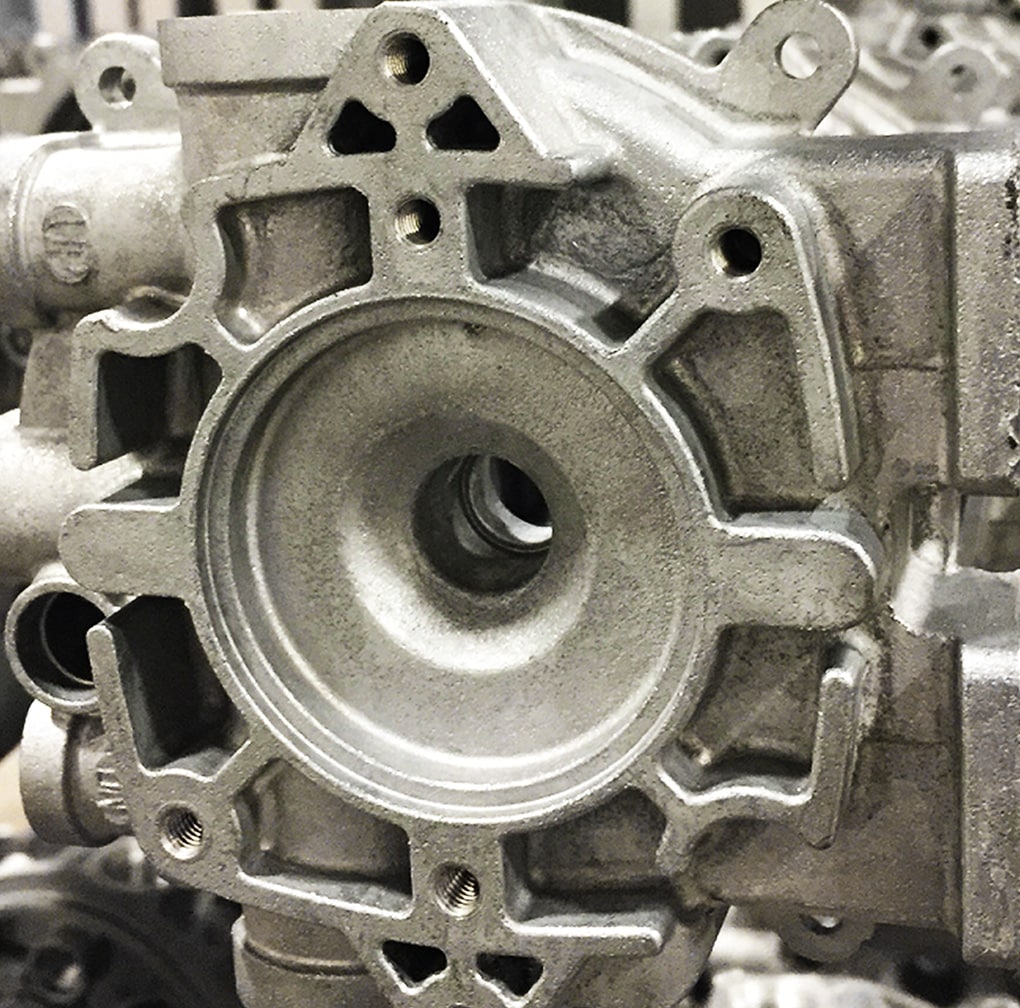
Light weight aluminum spreadings are indispensable to contemporary manufacturing, providing a mix of lightweight residential or commercial properties and durability. They promote complicated designs while decreasing assembly expenses. Industries such as automobile and aerospace often use these components for improved efficiency. The manufacturing of aluminum spreadings is not without its difficulties. Recognizing the nuances of this procedure exposes both the advantages and prospective mistakes. Exploring these variables will certainly provide much deeper insights right into their expanding value.
Review of Aluminum Casting Processes
Aluminum casting procedures play an important duty in production, supplying flexibility and efficiency. These processes include pouring liquified light weight aluminum right into mold and mildews to produce exact forms and elements. Numerous techniques are employed, consisting of sand spreading, die casting, and financial investment spreading, each identified by its technique of mold and mildew development and the intended application.
Sand spreading utilizes a mix of sand and binder to form mold and mildews, enabling for complex geometries. Die casting, on the other hand, entails compeling molten aluminum right into steel molds, leading to high precision and smooth finishes. Financial investment spreading, often utilized for complex styles, includes developing a wax pattern coated with a ceramic covering, which is then filled up with molten aluminum.
These casting methods satisfy diverse commercial needs, making light weight aluminum a preferred product for elements in fields such as automobile, aerospace, and consumer items. The selection of casting method substantially influences the last item's high quality and performance.
Benefits of Using Aluminum Castings
The advantages of making use of aluminum spreadings in manufacturing are various and considerable. To start with, light weight aluminum's lightweight nature adds to reduced total product weight, improving power efficiency in applications such as automobile and aerospace markets. Furthermore, aluminum spreadings exhibit outstanding rust resistance, making certain longevity and toughness in severe environments. The product's electrical and thermal conductivity also makes it appropriate for various applications, including electronic devices and warm exchangers.
Additionally, aluminum castings can be generated with complex layouts, enabling extra intricate forms that fulfill details practical requirements. This versatility adds to decreased setting up costs and enhanced design versatility. The spreading procedure itself is effective, enabling for high-volume manufacturing with constant quality. Aluminum is recyclable, making it an environmentally friendly choice in production. Collectively, these advantages highlight why light weight aluminum castings are increasingly preferred across varied fields, offering both efficiency benefits and economic effectiveness.
Typical Applications of Aluminum Castings
While numerous materials are made use of in production, aluminum spreadings attract attention as a result of their wide variety of applications throughout multiple industries. These spreadings are widely utilized in the automotive sector for engine elements, transmission housings, and structural parts, contributing to lighter cars and boosted gas effectiveness. In the aerospace industry, light weight aluminum spreadings are critical for aircraft elements, where weight reduction is important for performance and security.
Furthermore, the electrical market employs aluminum castings for housings and architectural aspects in machinery, gaining from the product's excellent conductivity. In customer products, light weight aluminum castings can be discovered in products such as devices and showing off equipment, offering sturdiness and a modern visual. Moreover, the building market makes use of aluminum spreadings in building components, home window structures, and fixtures, showcasing their flexibility and toughness. Generally, aluminum castings play an essential function in boosting product performance and performance throughout various industries.
Key Manufacturing Techniques for Aluminum Castings
The manufacturing of light weight aluminum spreadings relies on numerous strategies, with sand spreading and die spreading being among one of the most popular. Sand casting entails developing mold and mildews from sand, enabling intricate designs and big parts. In comparison, pass away casting makes use of high-pressure injection of molten light weight aluminum into reusable molds, offering precision and effectiveness for automation.
Sand Casting Process
Sand spreading stands as one of one of the most commonly used approaches for generating aluminum spreadings, many thanks to its versatility and cost-effectiveness. This procedure includes producing a mold from a blend of sand and a bonding representative, generally clay. When the mold is prepared, molten aluminum is poured into it, enabling the steel to load the tooth cavity. After cooling, the mold is broken away to reveal the spreading. Sand spreading suits complex geometries and large components, making it suitable for numerous applications. Additionally, it permits for simple modifications, enabling producers to adjust layouts promptly. The surface area coating might need additional machining for precise applications, making sure the last item satisfies top quality criteria.
Die Casting Methods
Pass away casting represents a highly effective method for creating aluminum spreadings, identified by its capacity to deliver high accuracy and exceptional surface finish. This technique mainly entails compeling molten light weight aluminum right into a mold and mildew under high pressure, making sure that elaborate forms and fine details are caught properly. There are two major die spreading approaches: hot chamber and cold chamber. Warm chamber die spreading is appropriate for alloys with reduced melting factors and permits faster cycles, while chilly chamber die spreading is excellent for high-temperature alloys, calling for different melting systems. Both techniques boost production rates and minimize product waste, making pass away casting a favored selection in sectors such as auto and electronics, where toughness and dimensional accuracy are vital.
Sustainability in Light Weight Aluminum Spreading Production
While the demand for aluminum spreadings remains to expand, producers are progressively focusing on sustainability in their manufacturing procedures. This shift is driven by the need to minimize ecological influence and conserve natural deposits. Numerous firms are taking on recycling campaigns, using scrap light weight aluminum, which significantly lowers power intake and greenhouse gas exhausts contrasted to key aluminum production. check that Additionally, advancements in casting technologies are allowing a lot more effective use materials, minimizing waste during the manufacturing process.
Manufacturers are likewise discovering green options to typical casting methods, such as 3D printing and advanced mold and mildew innovations, which assist maximize resource use. Aluminum Castings. In enhancement, applying sustainable methods in supply chain monitoring guarantees that resources are sourced responsibly. As an outcome, the aluminum casting market is making strides toward a more lasting future, aligning with worldwide environmental objectives while meeting the boosting demand for high-performance light weight aluminum products
Challenges and Considerations in Aluminum Spreading
Light weight aluminum casting presents various obstacles that manufacturers have to browse to ensure item integrity. Style complexity can make complex the spreading process, bring about prospective flaws and increased production time. Additionally, keeping rigorous quality assurance criteria is necessary to satisfy the needs of precision and reliability in finished parts.

Design Complexity Issues
Designing components for light weight aluminum casting provides various intricacies that engineers have to browse to accomplish excellent outcomes. One substantial difficulty is the need for specific geometry; elaborate layouts can cause troubles in mold production and boosted danger of defects. Furthermore, thermal properties of aluminum necessitate careful factor to consider of cooling down prices, as irregular air conditioning can cause bending. Wall thickness variants also present a challenge, as they can affect flow qualities and structural stability. Engineers should stabilize style appearances with manufacturability, making certain that features such as ribs and fillets are enhanced for stamina without complicating the spreading procedure. Factors to consider relating to click here for more draft angles are crucial to help with mold and mildew launch, further making complex the style process. These aspects collectively highlight the ins and outs associated with aluminum casting layout.
Top Quality Control Difficulties
Attaining top quality light weight aluminum spreadings entails navigating a series of high quality control difficulties that can considerably influence the final item. First, variations in resources make-up can cause inconsistencies in casting buildings, making it vital to guarantee material quality. Second, the casting procedure itself is susceptible to issues, such as porosity and contraction, which can compromise architectural honesty. In addition, temperature level control throughout melting and putting is crucial; changes can lead to uneven solidification, affecting dimensional accuracy. Additionally, thorough examination approaches, consisting of non-destructive screening, should be employed to recognize flaws early. Preserving stringent procedure paperwork and adherence to industry requirements is essential for traceability and quality guarantee, highlighting the complex equilibrium needed to produce reliable light weight aluminum spreadings in manufacturing.
Future Trends in Light Weight Aluminum Casting Modern Technology
As producers endeavor to improve efficiency and sustainability, technologies in light weight aluminum casting technology are emerging to fulfill these demands. One considerable fad is the combination of automation and expert system, which enhance production processes and boost accuracy in casting procedures. These developments minimize human mistake and optimize source usage, inevitably causing set you back decreases.
Furthermore, the fostering of sophisticated materials and alloys is reshaping the landscape. New formulations enhance efficiency qualities, such as rust resistance and lightweight residential properties, making light weight aluminum spreadings a lot more versatile across various sectors.
Lasting methods are obtaining traction, with a focus on recycling and minimizing waste (Wisconsin Aluminum Foundry). Strategies such as 3D printing are also being checked out to develop complex geometries that were formerly unattainable
Often Asked Inquiries
How Do Light Weight Aluminum Castings Compare to Other Materials?
Light weight aluminum castings provide advantages such as light-weight, deterioration resistance, and excellent thermal conductivity contrasted to various other products. They are typically preferred for applications requiring durability and efficiency, especially in auto and aerospace industries.
What Is the Lifespan of Aluminum Castings?
The life-span of aluminum castings usually varies from 10 to the original source half a century, relying on ecological problems, use, and maintenance. Their rust resistance and resilience contribute visibly to their resilient performance in numerous applications.
Can Aluminum Castings Be Recycled?
Yes, aluminum castings can be recycled. The recycling procedure is effective, enabling the healing of light weight aluminum without substantial loss of high quality, making it a sustainable selection in production and decreasing environmental effect.
What Precaution Are Needed Throughout Light Weight Aluminum Casting?
Throughout light weight aluminum spreading, vital safety and security steps include putting on suitable individual protective tools, making certain appropriate air flow, keeping devices, making use of fireproof materials, and carrying out risk-free handling procedures for molten metal to protect against injuries and mishaps.
Exactly How Do Temperature Level Modifications Influence Aluminum Castings?
Temperature adjustments substantially influence aluminum castings by affecting fluidness, solidification rates, and mechanical residential or commercial properties. Fast cooling can lead to boosted brittleness, while steady cooling promotes far better architectural integrity and reduces the threat of defects.
Die spreading, on the other hand, involves forcing molten light weight aluminum right into metal molds, resulting in high accuracy and smooth finishes. The production of light weight aluminum spreadings counts on different strategies, with sand casting and die casting being among the most noticeable. Sand spreading stands as one of the most extensively utilized techniques for generating light weight aluminum spreadings, many thanks to its flexibility and cost-effectiveness. Die spreading stands for a highly efficient technique for creating aluminum castings, defined by its capacity to supply high accuracy and superb surface finish. While the need for light weight aluminum spreadings continues to expand, manufacturers are significantly focusing on sustainability in their manufacturing processes.